


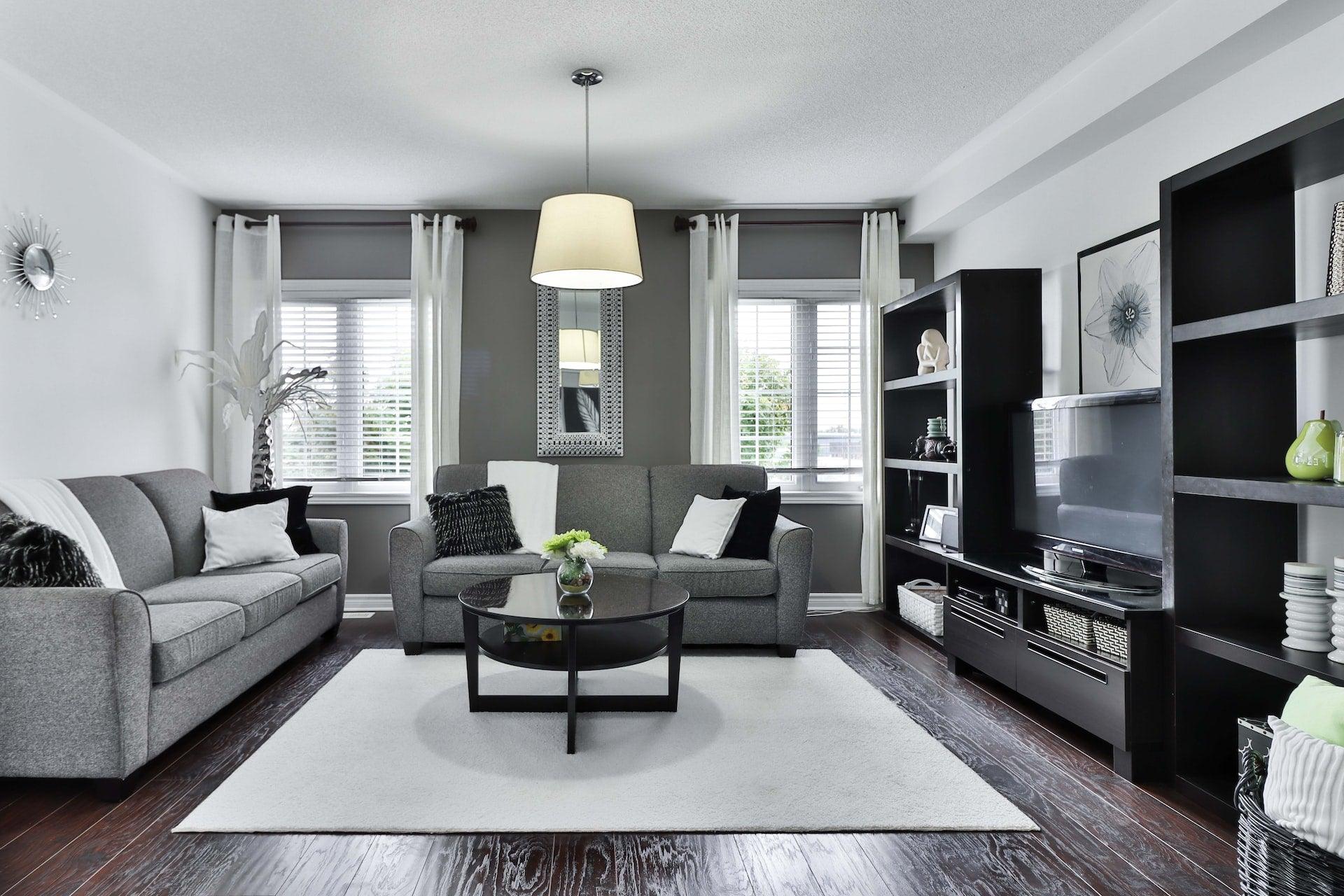
The living room is a space where people gather to relax, watch television, play games, and entertain guests. As such, the furniture in the room should be arranged in a way that promotes these activities. For example, the sofa might be placed in front of the television, and the coffee table might be in the center of the room.
After you have determined the purpose of the space, you can begin to plan how it should be laid out. Consider aspects such as the flow of traffic, symmetry, focal points, and repetition when designing the space.
This article will help you find the right arrangement for your living room. Read on.
Asymmetrical Parallel
An asymmetrical living room layout is one where the furniture is not arranged in a symmetrical way. This can create a more interesting and balanced look and allow for more intimate seating options and circulation paths.
If you have a small or crowded living room, consider using an asymmetrical plan. This means having fewer pieces of furniture and more open space. This way, you can move around more easily, and there’s less chance of something blocking your way. You can also use the extra space for side tables or task lighting.
L-Shaped
L-shaped living room arrangements are created by placing furniture at right angles to each other, typically with a coffee table in the middle. This can be done with a single armchair and sofa or two sofas placed together.
L-shaped seating is a great way to create a casual and welcoming atmosphere in your home. The open sides make it easy to move around, and the formation encourages relaxed conversation. This is a great option for homes with children or elderly people.
L-shaped seating is a great way to save space in small rooms or corners. The open sides make it a good choice for dividing a space into two zones, and the informality makes it a good choice for bedroom sitting areas or living rooms.
Symmetrical Parallel
Symmetrical parallel furniture arrangements are groupings of furniture that are perfectly mirrored. Two facing sofas, separated by a coffee table, is the most popular configuration, although the same idea can be achieved with paired armchairs or chaises.
A symmetrical living room arrangement creates a feeling of formality, balance, and grandeur. Furniture is arranged in parallel groups facing each other, encouraging direct interaction between guests. Chandeliers and perfectly positioned cushions add to the sense of sophistication.
A symmetrical living room layout is well-suited to homes with similar architectural features. When placed in front of a focal point, such as a fireplace or large window, a symmetrical design can make a room feel grand and formal.
U-Shaped
The U-shape of a living room encourages conversation because people face each other and can easily see each other. It also offers a lot of seating and is one of the most comfortable arrangements. This type of living room layout is often used in informal areas such as dens and game rooms.
U-shaped furniture arrangements are ideal for large living rooms with the space to accommodate these large pieces. This type of arrangement can help draw attention to the center of the room while maintaining a semi-open feel.
It is vital to keep the focal wall in mind when creating a U-shaped living room arrangement. This will help highlight the room’s natural focal points, such as a beautiful window view, an impressive fireplace, or a cinema screen in a media room.
Takeaway
The living room is one of the most critical rooms in the house. It is the room where family and friends gather to spend time together. The living room should be comfortable and inviting, and the furniture should be arranged in a way that is both functional and aesthetically pleasing.
If you are looking for top-notch home furniture, check out Avant Garde Furniture. We offer the latest world-class bedroom, living room, and dining room furniture. Shop now!



Leave a Reply